New Semantic Elements
Semantic elements are elements with a meaning.
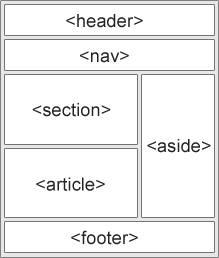
<section>
A section is a thematic grouping of content, typically with a heading.
Example: A Web site's home page could be split into sections for introduction, content, and contact information.
<article>
An article should make sense on its own, and it should be possible to read it independently from the rest of the web site.
Exampel: Blog post, Newspaper article
<section>与<article>可以根据需要相互nested
<header>
The
<header>element should be used as a container for introductory content.You can have several
<header>elements in one document.
footer
A footer typically contains the author of the document, copyright information, links to terms of use, contact information, etc.
You can have several
<footer>elements in one document.
nav
- The
<nav>element is intended for large blocks of navigation links. However, not all links in a document should be inside a<nav>element!
aside
The
<aside>element defines some content aside from the content it is placed in (like a sidebar).The aside content should be related to the surrounding content.
<figure> & figcaption
- images and captions can be grouped together in
<figure>elements
<figure>
  <img src="pic_mountain.jpg" alt="The Pulpit Rock" width="304" height="228">
  <figcaption>Fig1. - The Pulpit Rock, Norway.</figcaption>
</figure>